Ye're Deid |
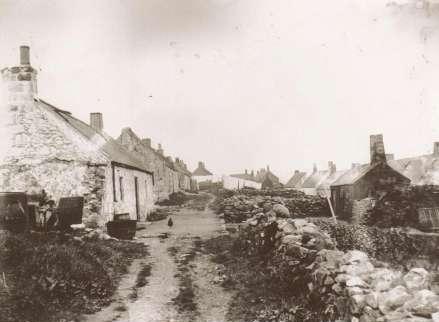
Post Wold War II Portlethen, Downies and Findon together formed communities that refused to be extinguished in face of the modern notions of town and country planners. For most outside observers it didn’t seem to be worthwhile making the effort to keep these small villages alive by upgrading the roads, introducing running water and proper sewerage systems. After all, the white fishing industry that had kept these villages alive had gone into terminal decline by then. As the author Peter Anson had observed in 1929; “Every year or so another of old fishermen of Portlethen dies and is buried in the kirkyard overlooking the sea. And as young men take their place it would seem that here….the fishermen will disappear in the course of time.”
 The planners had built around 50 new houses (Burnside
Gardens) in the vicinity of Portlethen Station and it appears that the
name of Portlethen had been reserved for the new town with Portlethen Village being more
commonly referred to as “Old Portlethen”. These planners envisaged a
time when the cliff top villages would disappear and the new township
would quietly take their place. However the residents of the fishing
villages stood their ground and fought for the cause to remain where
they were and their fight was a successful one with improved roads,
proper piped water and sewerage outfalls occurring in the late 1950’s
and early 1960’s. From that point onwards the villages have gone from
strength to strength and are today a sought after location to stay. This
poem was found at the head of a 1962 Evening Express article about these
villages.
The planners had built around 50 new houses (Burnside
Gardens) in the vicinity of Portlethen Station and it appears that the
name of Portlethen had been reserved for the new town with Portlethen Village being more
commonly referred to as “Old Portlethen”. These planners envisaged a
time when the cliff top villages would disappear and the new township
would quietly take their place. However the residents of the fishing
villages stood their ground and fought for the cause to remain where
they were and their fight was a successful one with improved roads,
proper piped water and sewerage outfalls occurring in the late 1950’s
and early 1960’s. From that point onwards the villages have gone from
strength to strength and are today a sought after location to stay. This
poem was found at the head of a 1962 Evening Express article about these
villages.
Ye're Deid!
“Ye’re Deid!”, they said, but we widnae lie doon:
Findon, Portlethen and Downies-toun.
Owre far tae fess watter, an’ sewers an’ a road,
Jist rax doon the shutters an’ shift yer abode.
There’s braw Cooncil hooses at Burnside biggin’
Inland whaur the gales winna shoogle the riggin’;
“Ye’re Deid!”, they said, but we widnae lie doon
At Findon, Portlethen and Downies-toun.
We’ve gotten wir watter an’ sewers an’ a road,
An’ a bonnie bus shelter to keep us a’ snod.
“Ye’re Deid!”, they said, but we widnae lie doon
At Findon, Portlethen and Downies-toun.